
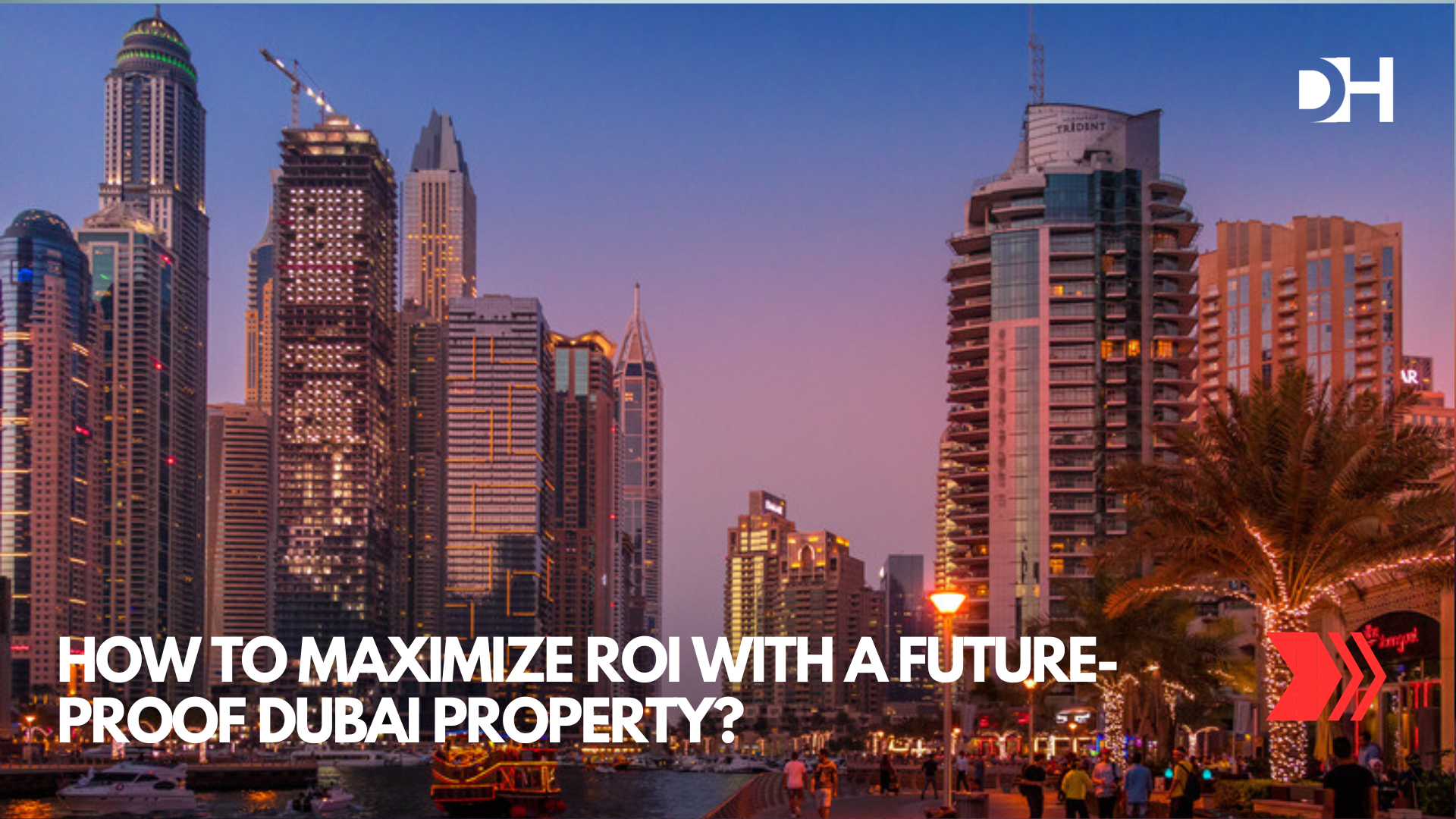
Dubai has become one of the world’s most attractive real estate investment destinations, offering tax-free rental income, strong capital appreciation, and a growing economy. While many investors focus only on buying at the right price, successful investors understand that maximizing return on investment (ROI) requires choosing a property that will remain valuable and in demand for years to come.
A future-proof property is one that continues to generate consistent rental income, appreciates in value, and adapts to changing market trends. Whether you’re a first-time investor or expanding your property portfolio, here are the key strategies to maximize ROI with a future-proof Dubai property.
What Is a Future-Proof Property?
A future-proof property is designed or located in a way that protects your investment against market fluctuations while maintaining long-term demand.
These properties typically offer:
- Prime or emerging locations
- Strong rental demand
- Modern amenities
- Sustainable construction
- Smart home technology
- Excellent transport connectivity
- High-quality community infrastructure
Instead of chasing short-term profits, future-proof investments focus on long-term wealth creation.
Choose the Right Location
Location remains the biggest factor influencing property value and rental income.
Some of Dubai’s most promising investment locations include:
- Dubai Creek Harbour
- Dubai Hills Estate
- Dubai South
- Business Bay
- Jumeirah Village Circle (JVC)
- Dubai Marina
- Expo City Dubai
Areas benefiting from new infrastructure projects, metro expansion, business hubs, and tourism developments often experience stronger capital appreciation over time.
Buying in an emerging community before prices peak can significantly increase your long-term ROI.
Invest in Growing Communities
Communities with schools, hospitals, parks, retail centers, and entertainment facilities attract long-term residents rather than short-term tenants.
Look for neighborhoods offering:
- Family-friendly environment
- Public transportation
- Walking and cycling paths
- Shopping destinations
- Healthcare facilities
- Educational institutions
These features improve occupancy rates and reduce vacancy periods.
Prioritize Rental Demand
A property with consistent rental demand generates stable cash flow.
Consider:
- Studio apartments near business districts
- One and two-bedroom apartments
- Family villas in established communities
- Properties near metro stations
- Homes close to universities or commercial zones
Research rental yields before purchasing. Areas with strong tenant demand often deliver better annual returns while maintaining occupancy throughout the year.
Buy from Reputable Developers
Developer reputation has a major impact on future property value.
Leading developers typically offer:
- Better construction quality
- Timely project completion
- Strong resale value
- Premium community management
- Higher buyer confidence
Properties developed by trusted companies generally experience stronger appreciation than projects from lesser-known developers.
Consider Off-Plan Opportunities
Off-plan properties remain popular among investors due to flexible payment plans and lower launch prices.
Benefits include:
- Lower entry costs
- Higher appreciation potential
- Developer incentives
- Attractive payment schedules
- Brand-new modern facilities
However, investors should evaluate project timelines, developer history, and market demand before committing.
Focus on Smart and Sustainable Features
Modern buyers and tenants increasingly prefer sustainable homes equipped with advanced technology.
Future-proof features include:
- Smart home automation
- Energy-efficient appliances
- Solar-ready infrastructure
- EV charging stations
- Green building certifications
- Water-saving systems
Sustainable properties often command higher rental values and remain competitive in changing market conditions.
Evaluate Long-Term Infrastructure Plans
Infrastructure significantly impacts future property prices.
Look for developments near:
- Metro expansions
- New highways
- Business districts
- Shopping malls
- Airports
- Tourist attractions
- Healthcare hubs
Government investments usually increase surrounding property values over time.
Diversify Your Investment Strategy
Avoid investing all your capital into one property type.
A balanced portfolio may include:
- Residential apartments
- Family villas
- Holiday homes
- Commercial units
- Off-plan investments
Diversification helps reduce risk while improving long-term returns.
Understand Service Charges
High service charges can reduce your rental profitability.
Before purchasing, calculate:
- Annual maintenance fees
- Community charges
- Property management costs
- Insurance
- Utility expenses
A slightly lower purchase price may not always produce better ROI if ongoing costs are high.
Think Beyond Capital Appreciation
Many investors focus only on property price growth.
Instead, evaluate total ROI by considering:
- Annual rental income
- Occupancy rates
- Capital appreciation
- Maintenance costs
- Tax advantages
- Financing costs
A balanced investment often delivers stronger long-term performance than chasing rapid price increases alone.
Keep Future Buyer Demand in Mind
When purchasing, think like your future buyer.
Ask yourself:
- Will this location remain desirable in 10 years?
- Is the property near future developments?
- Does it appeal to families, professionals, or investors?
- Are there enough amenities nearby?
- Is transportation improving?
Properties with broad buyer appeal are easier to sell and often achieve better resale values.
Work with Experienced Professionals
Professional advice can help investors avoid costly mistakes.
Consider working with:
- Licensed real estate agents
- Mortgage advisors
- Property management companies
- Legal consultants
- Market analysts
Expert guidance helps identify high-performing investment opportunities while ensuring compliance with Dubai’s property regulations.
Final Thoughts
Dubai’s property market continues to attract investors from around the world thanks to its strong economic growth, investor-friendly policies, world-class infrastructure, and attractive rental yields. However, maximizing ROI requires more than simply purchasing a property in a popular area.
Choosing a future-proof property means investing in locations with long-term growth potential, selecting developments by reputable developers, prioritizing sustainability, and understanding changing buyer and tenant preferences. By focusing on quality, infrastructure, rental demand, and smart investment planning, investors can build a resilient real estate portfolio that delivers both consistent income and long-term capital appreciation.
Whether you’re buying your first apartment or expanding an existing portfolio, a future-proof strategy can help protect your investment while maximizing returns in Dubai’s evolving real estate market.
Read More
- How to Set the Perfect Price for Your Dubai Property?
- Best Areas to Buy Property in Dubai Under 1Cr
- Top Featured Off-Plan Projects in Business Bay Dubai