
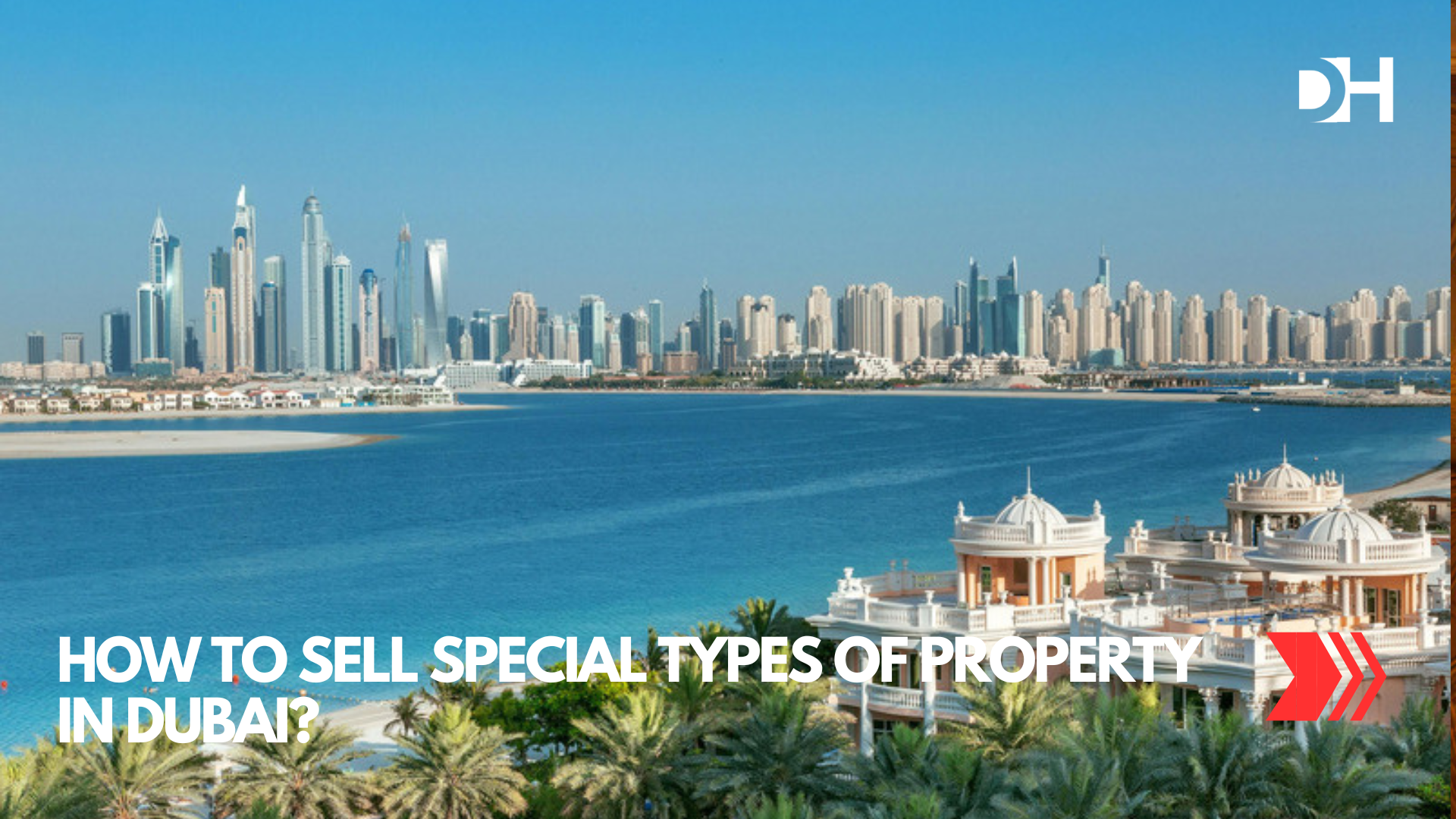
Dubai’s real estate market offers opportunities across luxury villas, off-plan investments, commercial spaces, inherited assets, and mortgaged homes. While the standard selling process is relatively straightforward, special types of properties often involve additional legal requirements, documentation, and approvals.
Understanding these differences can help sellers avoid delays, reduce costs, and achieve better returns. This guide explains how to sell special types of property in Dubai and what owners should know before listing their assets.
What Are Special Types of Property in Dubai?
Special properties are those that require procedures beyond a conventional residential sale. They typically include:
- Inherited properties
- Off-plan units
- Mortgaged homes
- Commercial properties
- Jointly owned assets
- Luxury and ultra-prime properties
- Properties owned by companies
- Gifted or transferred properties
Each category has its own regulations and documentation requirements.
Selling an Inherited Property in Dubai
Inherited properties cannot be sold immediately after the owner’s passing. Legal ownership must first be transferred to the heirs according to UAE inheritance laws.
Before selling, heirs must obtain:
- A legal inheritance certificate.
- Court approval where required.
- Updated title deeds reflecting ownership changes.
- No-objection documents from all beneficiaries.
If multiple heirs are involved, unanimous consent is generally necessary before proceeding with the transaction.
Working with a legal advisor can simplify the process and prevent disputes among family members.
How to Sell an Off-Plan Property in Dubai
Off-plan properties are among Dubai’s most popular investments, but selling them before completion involves additional steps.
Important considerations include:
Check Developer Rules
Many developers impose restrictions on resale. Some require buyers to pay a specific percentage of the property’s value before allowing transfers.
Obtain a No Objection Certificate (NOC)
Developers usually issue an NOC confirming that:
- Service charges are cleared.
- Installments are up to date.
- The property is eligible for transfer.
Verify Market Conditions
Off-plan values fluctuate based on construction progress, location demand, and project reputation. Sellers should assess current market trends before listing.
Proper timing can significantly increase profitability.
Selling a Mortgaged Property in Dubai
Selling a property with an active mortgage is common, but coordination between banks and buyers is essential.
The process generally includes:
- Obtaining an outstanding mortgage balance statement.
- Securing bank approval for the sale.
- Arranging settlement of remaining loan amounts.
- Completing mortgage release procedures.
In many cases, the buyer’s funds are used to clear the seller’s mortgage before ownership transfer occurs.
Professional brokers often help manage these complex transactions efficiently.
Selling Commercial Property in Dubai
Commercial real estate transactions differ from residential sales because investors focus heavily on returns and business potential.
When selling commercial assets, prepare:
- Tenancy contracts.
- Rental income records.
- Service charge statements.
- Occupancy rates.
- Business licensing information where applicable.
Buyers often evaluate:
- Rental yields.
- Lease durations.
- Tenant quality.
- Future development plans in the surrounding area.
Providing transparent financial information can increase buyer confidence and speed up negotiations.
Selling Jointly Owned Property
Joint ownership arrangements require agreement from all parties involved.
Common examples include:
- Married couples.
- Business partners.
- Family-owned investments.
- Multiple investors.
Before listing the property, owners should determine:
- Ownership percentages.
- Profit-sharing arrangements.
- Authority to negotiate or sign agreements.
If disagreements arise, legal mediation may become necessary before the sale can proceed.
Clear communication among co-owners is crucial for avoiding delays.
Marketing Luxury Properties in Dubai
Luxury homes require specialized marketing strategies.
Unlike standard apartments, ultra-prime buyers often expect:
- Professional photography.
- High-quality video tours.
- Private viewings.
- International marketing campaigns.
- Exclusive brokerage representation.
Key areas for luxury sales include waterfront communities, golf estates, and branded residences.
Highlighting unique features such as:
- Private pools.
- Smart home systems.
- Designer interiors.
- Marina access.
- Panoramic skyline views.
can significantly improve buyer interest.
Pricing strategy also matters. Overpricing a luxury property may lead to prolonged market exposure and reduced negotiating power.
Selling Property Owned by a Company
Corporate-owned properties involve additional legal requirements.
Documentation may include:
- Trade licenses.
- Board resolutions authorizing the sale.
- Memorandums of association.
- Shareholder approvals.
- Authorized signatory documents.
Foreign companies may need notarized and attested paperwork depending on their jurisdiction.
Engaging legal professionals ensures compliance with regulatory procedures.
Obtain the Required No Objection Certificate (NOC)
Most Dubai property transactions require an NOC from the developer.
The certificate confirms:
- Outstanding service charges have been settled.
- No legal disputes exist.
- Ownership details are accurate.
- The transfer can proceed legally.
Failure to secure an NOC can delay or even halt the sale process.
Sellers should begin this step early to avoid last-minute complications.
Understand Taxes, Fees, and Selling Costs
Although Dubai does not impose capital gains tax on most property sales, sellers still face various expenses.
Typical costs include:
- Brokerage commissions.
- NOC fees.
- Mortgage settlement charges.
- Administrative fees.
- Property valuation expenses.
Planning for these costs helps sellers determine realistic profit expectations.
Work With Specialized Real Estate Experts
Different property categories require different expertise.
Consider working with professionals who specialize in:
- Luxury real estate.
- Commercial investments.
- Off-plan projects.
- Probate and inheritance matters.
- Mortgage settlements.
Their market knowledge can improve pricing strategies and simplify legal processes.
Tips for a Successful Sale
To maximize results when selling special properties in Dubai:
- Prepare all documents in advance.
- Resolve outstanding financial obligations.
- Price the property competitively.
- Invest in professional marketing.
- Understand category-specific regulations.
- Consult legal and real estate experts.
Proactive planning minimizes delays and increases buyer confidence.
Final Thoughts
Selling special types of property in Dubai requires more than simply listing an asset on the market. Whether you’re dealing with inherited homes, off-plan investments, commercial spaces, luxury residences, or mortgaged properties, understanding the unique legal and procedural requirements is essential.
By preparing the necessary documents, securing approvals, and working with experienced professionals, sellers can navigate complex transactions smoothly and achieve the best possible outcomes in Dubai’s dynamic real estate market.
Careful planning and informed decision-making remain the keys to a successful property sale in 2026 and beyond.
Read More
- How to Sell a House in Dubai Quickly and Legally?
- Complete Property Handover Checklist for Buyers in Dubai (2026 Guide)
- Understanding the 4x Compensation Rule in Land Acquisition in the UAE
- Understanding Dubai Public Property Laws and Regulations in 2026