
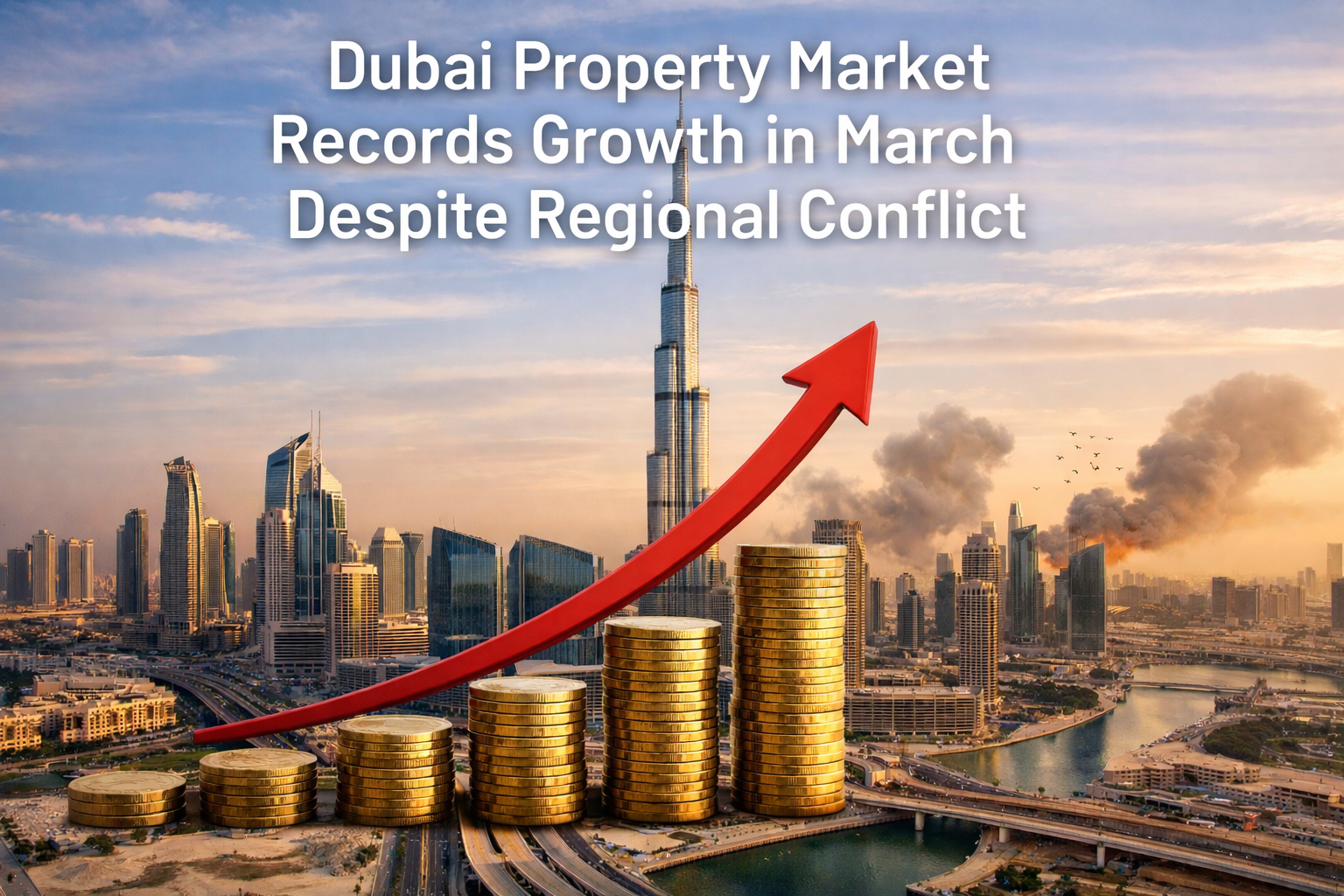
Dubai’s real estate market continues to demonstrate remarkable resilience. Despite ongoing regional tensions and geopolitical uncertainty, March 2026 witnessed notable growth in property transactions, prices, and investor activity. While conflicts in the Middle East often create volatility across markets, Dubai has once again proven its ability to withstand external shocks and maintain investor confidence.
This unexpected growth has caught the attention of global investors, analysts, and homebuyers alike. But what exactly is driving this upward momentum, and can it be sustained in the coming months?
Strong Performance in March 2026
March 2026 turned out to be a positive month for Dubai’s property sector. Transaction volumes increased, with both off-plan and ready property sales contributing to the surge. Key areas such as Downtown Dubai, Dubai Marina, and Jumeirah Village Circle recorded strong activity, indicating widespread demand across different price segments.
Property prices also showed moderate appreciation, especially in prime and waterfront locations. Luxury villas and high-end apartments continued to attract wealthy investors seeking stable and secure assets.
Why Dubai Remains a Safe Haven?
One of the main reasons behind this growth is Dubai’s reputation as a safe haven during times of global uncertainty. Investors from regions affected by conflict often shift their capital into stable real estate markets—and Dubai fits that profile perfectly.
The emirate offers:
- Political stability
- Strong legal framework
- Tax-free property ownership benefits
- High rental yields compared to global cities
These factors make Dubai an attractive destination, particularly when neighboring regions face instability.
Rise in International Investor Interest
Another key driver of growth is the increasing influx of international investors. Buyers from Europe, Asia, and other parts of the Middle East are actively investing in Dubai real estate.
High-net-worth individuals (HNWIs) are particularly drawn to luxury properties, beachfront villas, and branded residences. The demand for premium living spaces has surged as investors seek both lifestyle upgrades and long-term asset security.
Additionally, currency fluctuations and global economic shifts have made Dubai property relatively more affordable for foreign investors, further boosting demand.
Off-Plan Market Leading the Surge
Dubai’s off-plan property segment continues to play a crucial role in market growth. Developers are launching new projects with flexible payment plans, making it easier for buyers to enter the market.
Off-plan properties offer:
- Lower initial investment
- Attractive payment structures
- Potential for capital appreciation
Popular communities like Dubai Hills Estate and Business Bay have seen strong off-plan sales, reflecting buyer confidence in future growth.
Luxury Segment Driving Momentum
The luxury real estate segment remains one of the strongest performers in Dubai. High-end properties in areas such as Palm Jumeirah and Emirates Hills continue to command premium prices.
Demand for luxury villas has surged as buyers prioritize space, privacy, and exclusivity. Many investors view these properties as safe, long-term investments that can deliver both rental income and capital gains.
Impact of Regional Conflict
While regional conflict has created uncertainty, its impact on Dubai’s real estate market has been surprisingly limited in March. In fact, in some cases, it has indirectly boosted demand.
Investors looking to move assets away from high-risk regions are choosing Dubai as a safer alternative. This capital inflow is helping sustain market growth despite external challenges.
However, experts caution that prolonged conflict could still affect market sentiment, especially if it disrupts global trade or investor confidence on a larger scale.
Government Initiatives Supporting Growth
Dubai’s government continues to play a vital role in supporting the real estate sector. Initiatives such as long-term visas, golden visas, and investor-friendly regulations have strengthened market confidence.
Policies that encourage foreign ownership and residency have made Dubai more accessible to global buyers. Additionally, infrastructure development and smart city initiatives are enhancing the overall appeal of the emirate.
Future Outlook
Looking ahead, Dubai’s property market is expected to remain stable with moderate growth. While regional tensions may create short-term fluctuations, the long-term outlook remains positive.
Key factors that will shape the future include:
- Global economic conditions
- Interest rates
- Investor sentiment
- Continued government support
If stability is maintained, Dubai could see sustained demand, particularly in the luxury and off-plan segments.
Conclusion
Dubai’s real estate market has once again demonstrated resilience in the face of uncertainty. The growth recorded in March 2026 highlights the emirate’s ability to attract investors even during challenging times.
With strong fundamentals, investor-friendly policies, and global appeal, Dubai continues to stand out as one of the world’s most dynamic property markets. While risks remain, the overall outlook suggests that Dubai is well-positioned to navigate regional conflict and maintain steady growth in the months ahead.
Read More
- Impact of War on Dubai Real Estate Market
- Will Dubai Property Prices Fall After Iran Attack? Market Impact Explained
- Upcoming Property Show in Dubai 2026: Dates, Events & Investment Deals